Panchalingas - Siva Temples
Pathaleshwara, Maruleshwara, Arkeshwara, Vaidyanatheeshwara and Mallikarjuna temples - Talakadu, Karnataka
The Panchalinga Kshetrams (considered to represent the 5 faces of Lord
Shiva) - Pathaleshwara (or Vasukhishwara), Maruleshwara (or
Saikateshwara), Arkeshwara, Vaidyanatheeshwara and Mallikarjuna temples
dedicated to Lord Shiva are located at Talakad, Karnataka
Pathaleshwara
Maruleshwara
Arkeshwara
Vaidyanatheeshwara - The lord is Vaidyanatheeswara and the Goddess is Manonmani
Mallikarjuna - The Lord is Mallikarjuna Swamy and the Goddess is Brahmaraambigai
Talakad (45 kms from Mysore and 185 kms from Bangalore) is a town on the
left bank of the Cauvery river. The river Cauvery forms a garland
around Talakadu as it flows from Thirumukkoodal and Sivasamudram.
The place was also known as Gajaaranyam (Gaja-elephant ;
aaranyam-forest) because of the elephants that roamed the forests here.
Another interesting legend is that Somadatta, from sage Vasishta's
lineage (vamsam) did penance here along with thousands of his disciples
in the form of elephants and hence the place came to be known as
Gajaaranyam - Somadutta, with his disciples performed penance at Kasi
wishing for moksham. Lord Siva gave him darshan and asked him to reach
Rushiga rishis' hermitage at Talakaadu. The rishi and his disciples were
however killed on the way by elephants. Since they were calling out
"Elephants" as they were dying, they reincarnated as elephants. They
continued to worship Lord Siva as elephants and attained moksham.
The idols of the two hunters Tala & Kaada can be seen in the Veerabadra Swamy temple adjacent to the Vaidyanatha temple.
Talakad was once a temple region with over 30 temples, but these are buried under sand dunes now.
Talakad enjoyed the patronage of various dynasties - the Western Gangas,
the Tamil Cholas, the Hoysalas, Vijayanagar rulers and the Maharajas of
Mysore.
Photos of Talakad by P S Pratheep, Laya
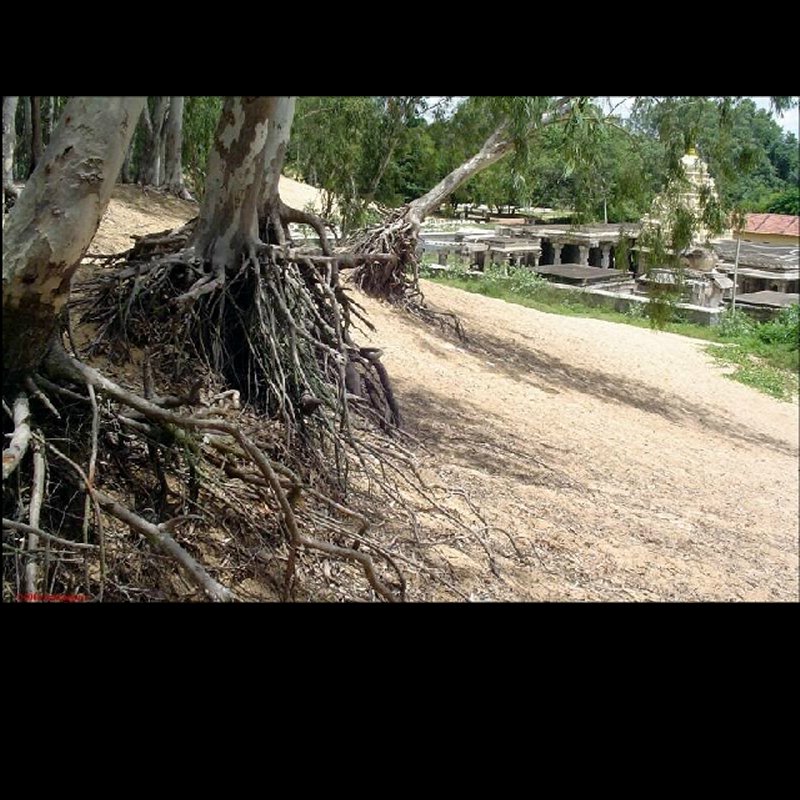
Talakadu - The sand dunes at the site. The sand is removed to excavate the temples
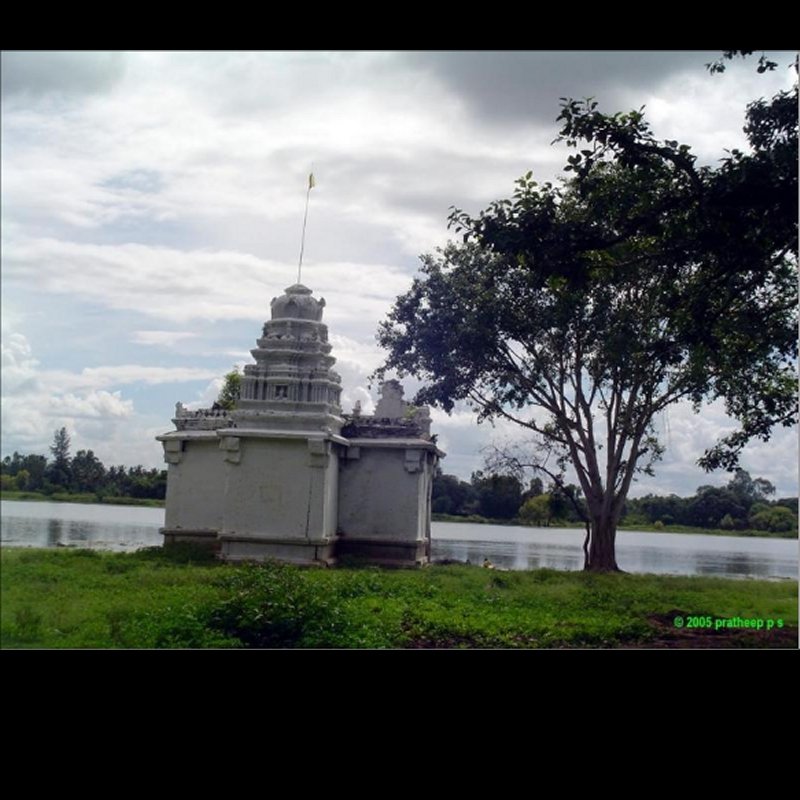
A small shrine on the banks of the river Cavery
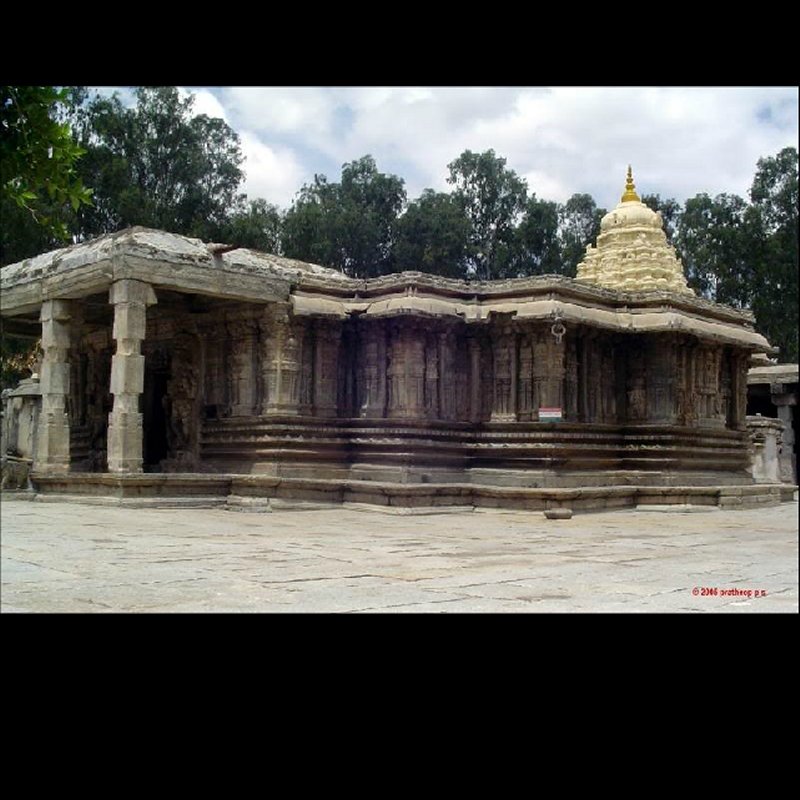
Talakadu - Vaidyeswara Temple
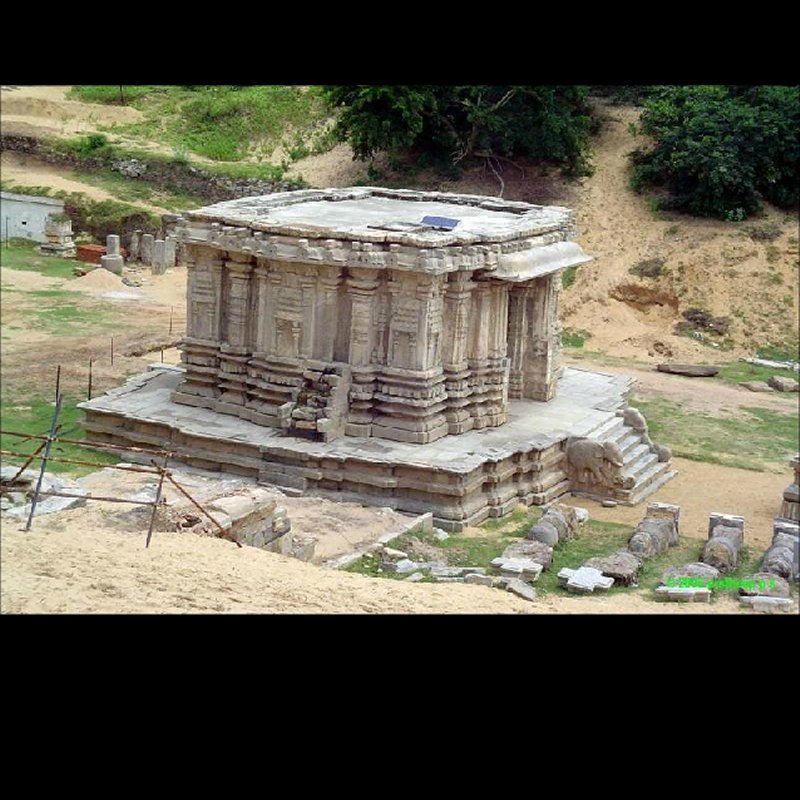
Talakadu - Maraleswara Temple
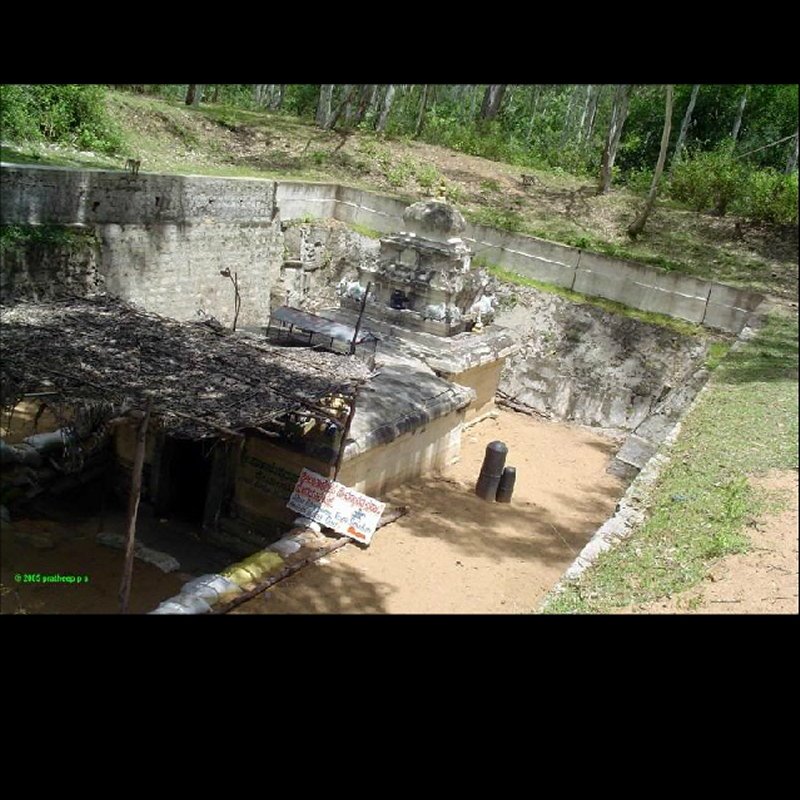
Talakadu - Pataleswara temple
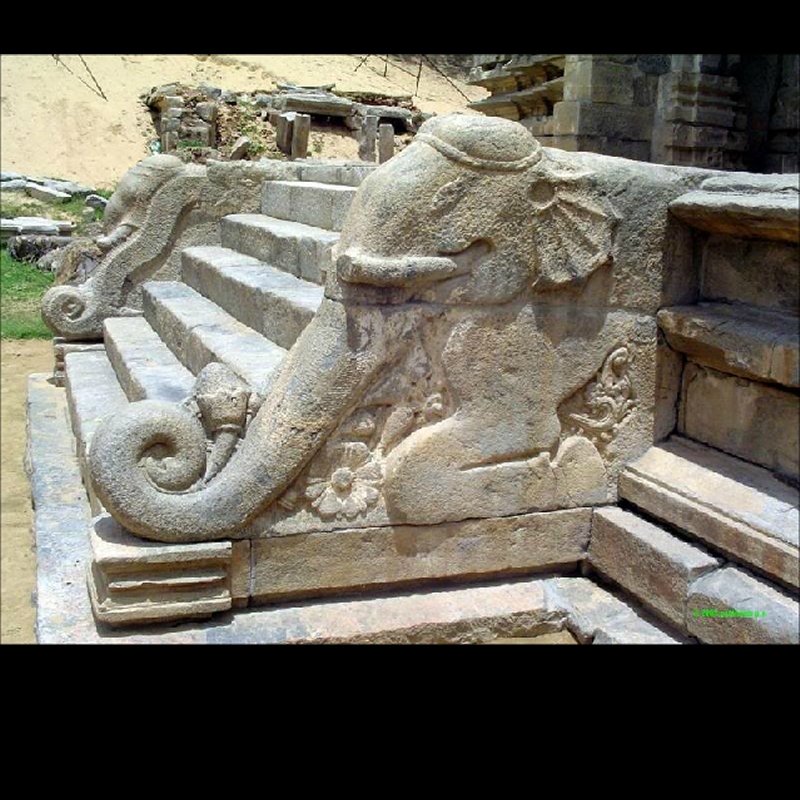
Talakadu - Steps to the sanctum sanatorium - Maraleswara temple
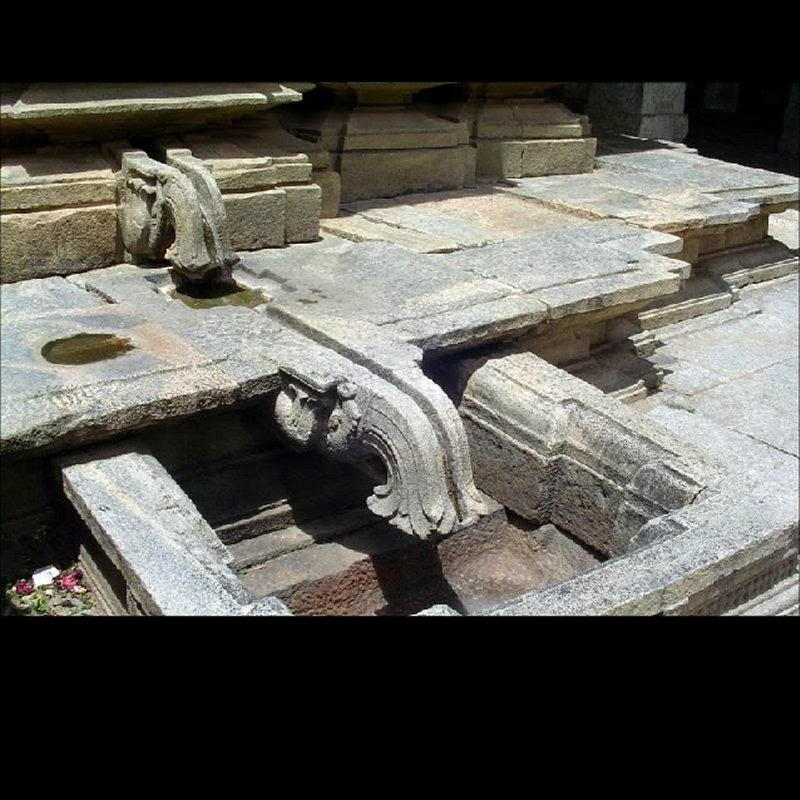
Talakadu - The sacred duct from the inner sanctum of the Shiva shrine
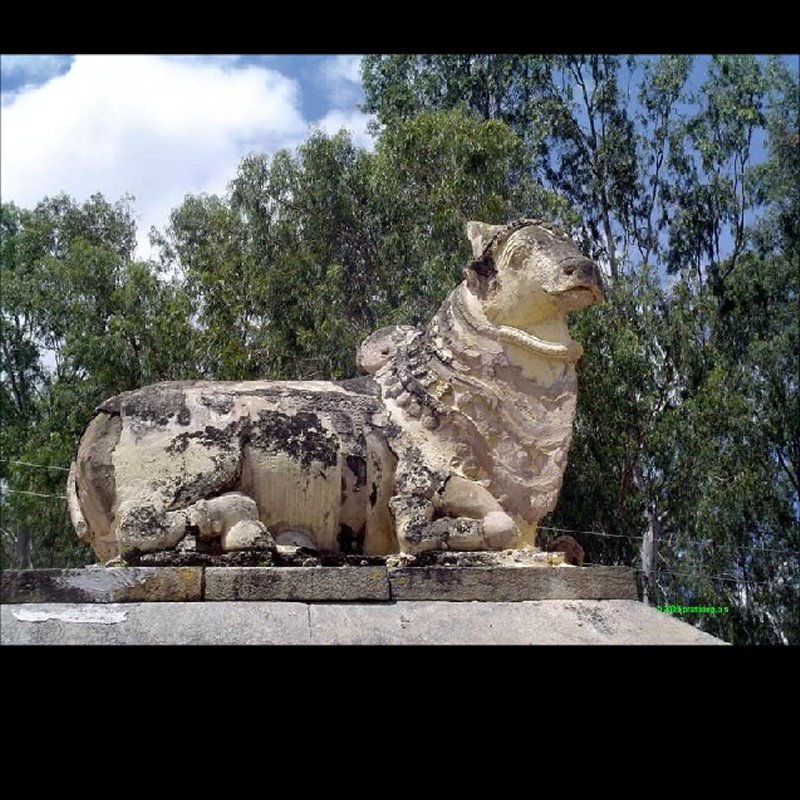
Talakadu - Nandi at the Vaidyeswara temple
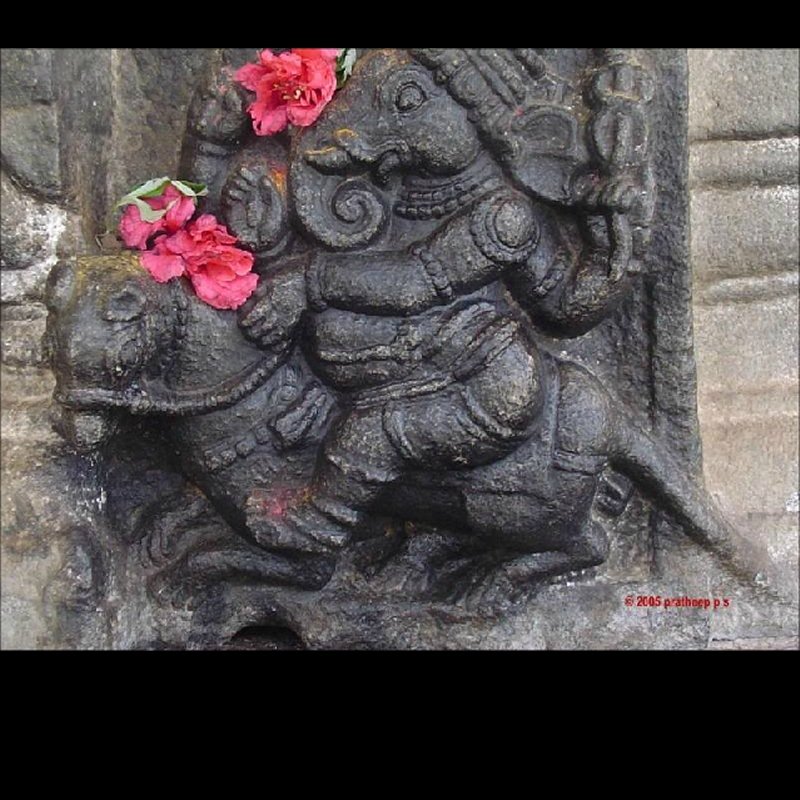
Talakadu - Lord Vinayaka on his vehicle
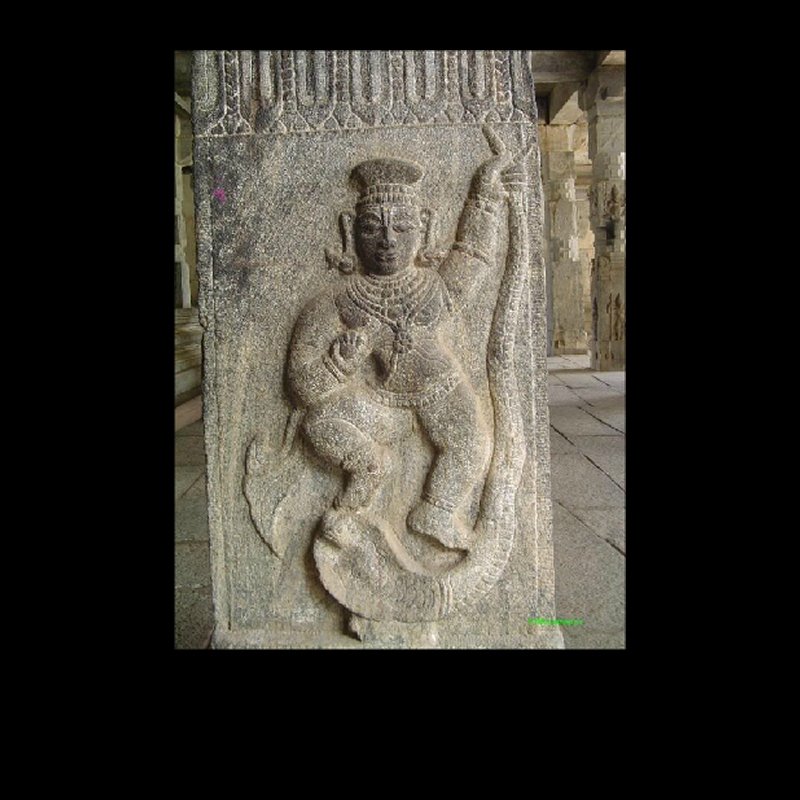
Talakadu - Mural of Lord Krishna dancing on snake Kalinga
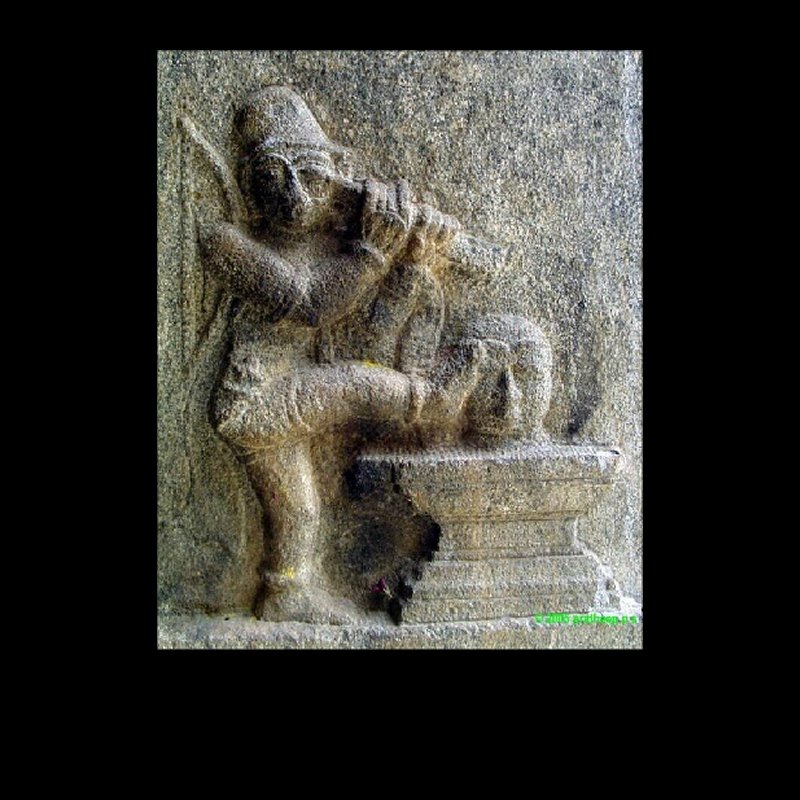
Talakadu - Mural of Kannapanaar sacrificing his eyes to Lord Siva
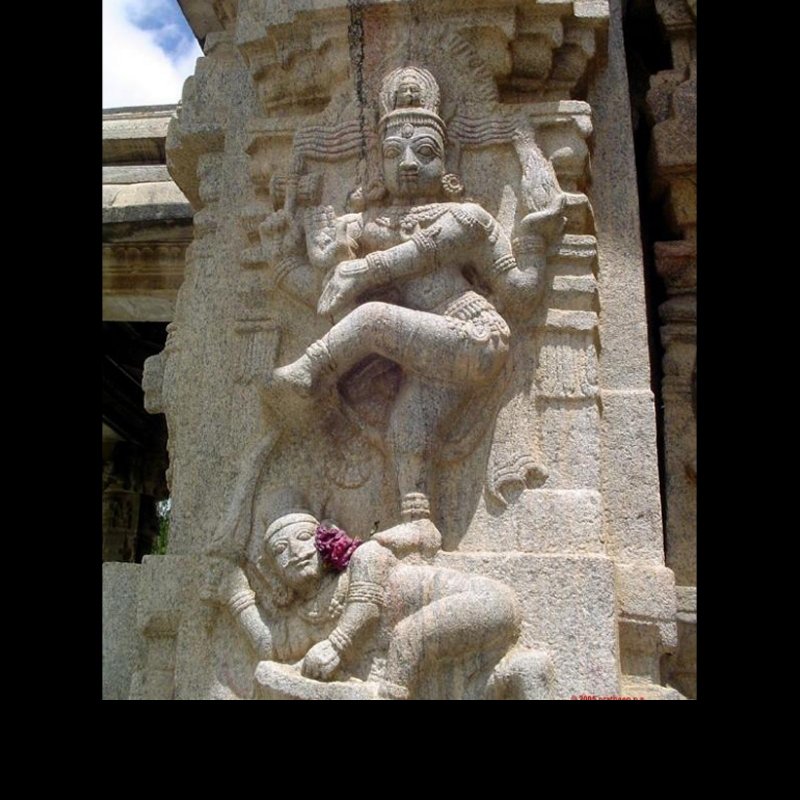
Talakadu - Lord Shiva dancing on the demon
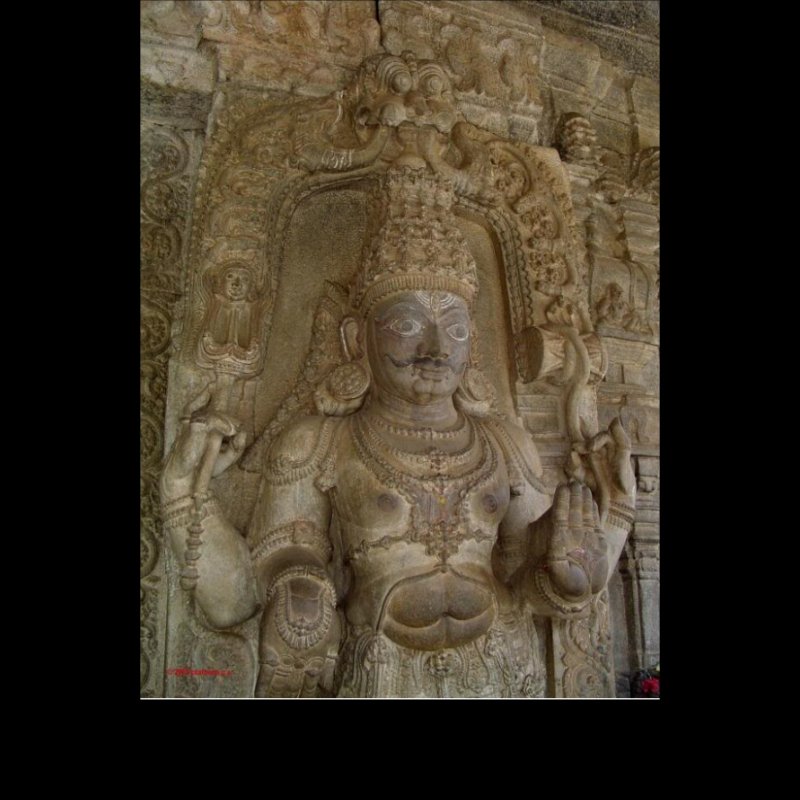
Talakadu - The Gatekeeper at the entrance of Vaidyeswara temple
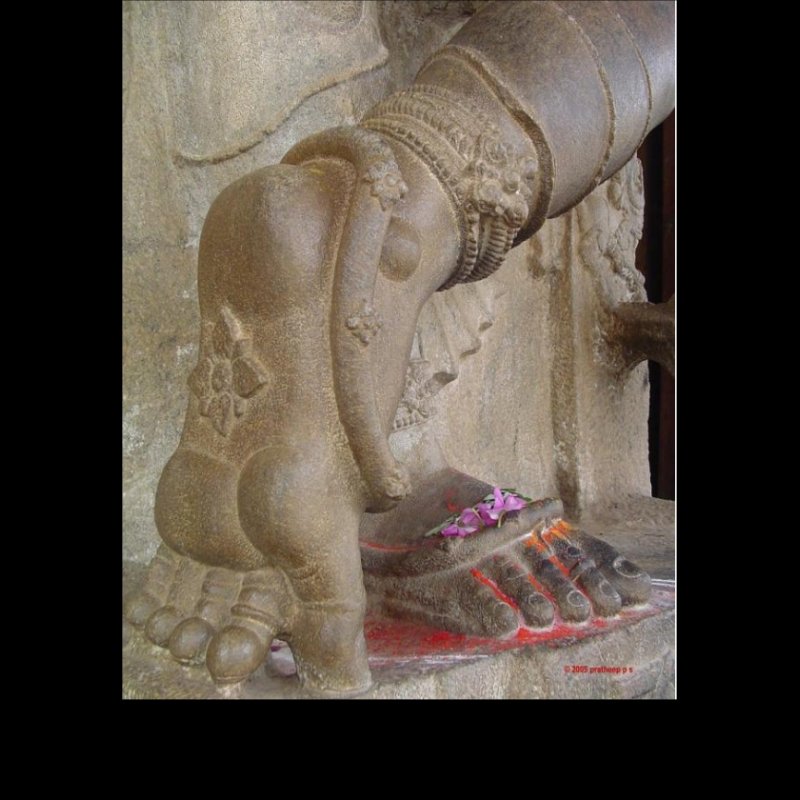
Talakadu - The feet of the gatekeeper
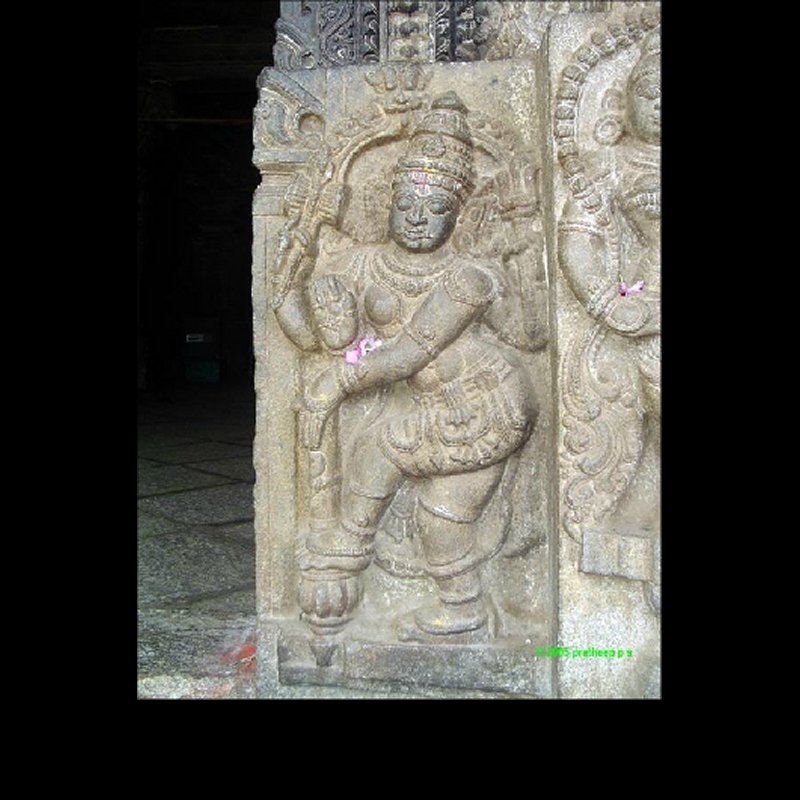
Talakadu - Gatekeeper at the Vaidyeswara temple
Vaidyanatha temple
There are two huge beautifully structured and ornamented dwarapalakas at
the entrance of the Vaidyanatha temple, a Ganesha idol on his munjur
vahanam on the right. It is said that the royal family entered the
temple for worship through an entrance to the south of the front
mandapam. In the inner mandapam, there are idols of Lord Nataraja,
Durgai, Badhrakaali, Kaaligambal, Shaaradaambigai. On either side of the
main sanctum are the idols of Lord Ganesha and Muruga. The goddess is
Manonmani.
Shiva healed himself
An elephant daily performed the ritual of bathing in the Gokarnam pond.
It took water & lotus from the pond & performed pooja at a
particular spot. Two hunters Tala and Kaada, were curious. They struck
at the tree with an axe, but to their horror blood gushed out from the
cut. They realised that they had struck at a Siva lingam and begged
forgiveness. The blood soon turned to white milk. They heard a divine
voice instructing them to dress the wound with the leaves and fruits of
the tree. And soon the wound healed. They drank the milk and attained
moksham. Since the hunters Tala & Kaada attained moksham here, the
place came to be know as Talakaadu. Since the Sivan lingam had shown
ways of healing himself, the Lord is known by the name
Vaidyanaatheeswarar.
Paathaleshwara
Pathaleshwara, Maruleshwara built by the Ganga kings are considered to be the oldest.
The Shivalingam at Pathaleshwara - Pathaleshwarar or Vasukheeswarar
changes color - appears red in the morning, black in the afternoon and
white in the night.
Near the Pataleeswarar temple, to the north is the Keerthi Narayana
temple built by the Hoysala king Vishnuvardhan. He was initially a Jain
known as Bittideva, but converted to Vaishnavism following the preaching
of Ramanujar. His queen Shantaladevi however continued to follow
Jainism. He built thousands of temples during his reign. The
Keerthinarayanar temple along with 4 other Vishnu temples are called the
Pancha Naaraayanar temples. (Keerthi Narayana temple at Thalakaadu,
Veera Narayanar at Kadhagu, Kesava Narayana temple at Belur, Sriman
Narayana temple and Vijaya Narayana temple). This temple was excavated
from under the sand in 1911. Originally there was a sannidhi for
Sundaravalli Thaayar to the south of the main sannidhi. Since that was
covered with sand, the vigraham was installed in the navaranga mandapam.
There are idols of Ramanujar, Vedhandha Desikar, Nammazhwar in the
navaranga mandapam and Yoga Narasimhar and Viswasenar in the Ardha
mandapam. The nine feet high standing form of Lord Vishnu on a garuda
peedam is an imposing structure. He is seen holding the changu, chakram,
mace and lotus. In the sanctum is the idol of Keerthi Narayanar &
outside to the west of the sanctum is an idol of reclining Ranganathar.
There is an interesting story behind this. Tippu Sultan had great
respect for Ranganathar and so in times of war, the Hindu kings had
taken the precaution to cover the main sanctum of Keerthi Narayanar with
a huge boulder showing only the Ranganathar idol to protect the temple
from destruction. The processional deities of the Keerthi Narayanar
temple are placed in a temple in the same street as the Vaidyanatha
temple.
Maruleshwara temple
Half a mile to the North of the Keerthi Narayanar temple is the
Maruleshwara temple. The huge Siva lingam here is considered to have
been installed and worshipped by Lord Brahma. In the front mandapam
there are idols of Maheswara, Thirumal, Ambigai, Surya, Ganapathi,
Shanmugar, Veerabadhrar and navagrahams.
Arkeshwara temple
This temple is slightly isolated. Near the Arkeshwara temple is the
Kottai Vinayagar temple. There are idols for Bhairavar, Durgai and
abhayangara lingam in this temple. There is a rock at the entrance with a
Vaastu yantram. It is believed that tying deceased cows to this rock
will cure them.
Mallikarjuna temple
The Lord at the Mallikarjuna temple at Mudukuthurai is a small lingam -
Mallikarjuna Swamy and the Goddess is Brahmaraambigai. The foot marks of
Kaamadhenu are seen on the lingam.
Pancha lingams can be worshipped in a mandapam opposite the Vaidyanatha
swamy temple. There are also sannadhis for Chamundeeswari, Veerabadrar,
Sandhyaa Ganapathi. There are several small temples under worship -
Veera Anjaneyar koil and Anaadhi Vaigundanaadhar temples.
There are eight hills surrounding Thirumukudal. Somagiri (Mudukuthurai)
on the east, Akkaparvatham on the southeast, Devesaparvatham on the
south, Janakagiri (giri, parvatham-hill)on the southwest, Mahaabalagiri
(Shaamundi) on the west, Dindukaasalam in the northwest, Mallikasalam in
the north and Guptagiri.
Panchalinga darshanam is an occassion celebrated every 12 years on a new
moon day (celebrated in 2006). Devotees should start the ritual of the
day by bathing in the Gokarna theertham. Then they have to worship
Gokarneswara, Chandikadevi and then Vaidyanatheeshwara. They then have
to bathe in the northern, eastern, southern and western stretches of the
Kaveri, worship Arkeshwara, Pataleshwara, Maraleshwara and
Mallikarjuna, returning to Vaidyanatha temple after each worship.
Finally they have to worship Kirtinarayana and conclude the ritual of
the day.
Legends regarding the formation of the sand dunes
Curse of Talakad by Alamelamma on the Wodeyar dynasty, Maharajas of Mysore
en.wikipedia.org/...
The cue to dedicate a temple came from a well-wisher of Wadiyar, who had a clairvoyance of Alamelamma
karnataka.com/tourism/talakad
Source:
Karnatka Payanam by Baraneetharan, published by Kalaignaan Pathipagam, 198
Ashtalakshmi temple, Besant Nagar, Chennai
|