Trip to Mahabalipuram, Tamilnadu on December 5, 2007
Mahishasuramardhini Mandapam
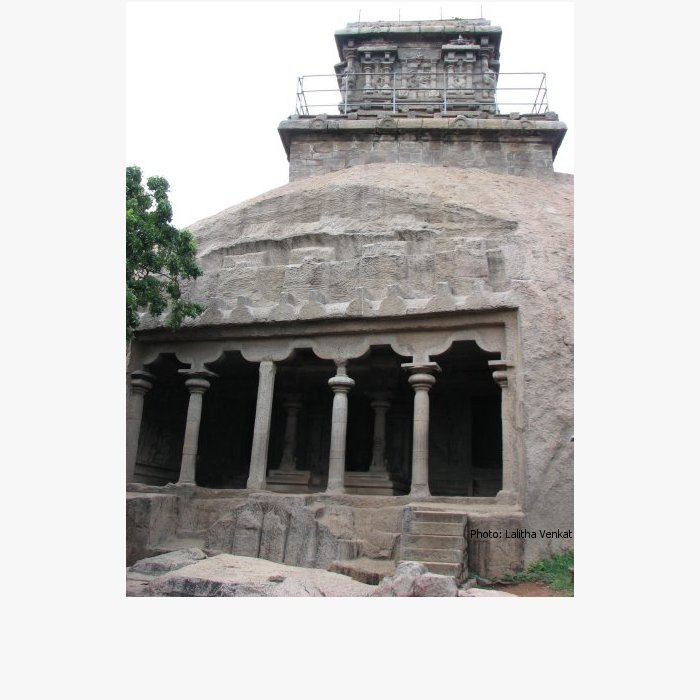
Mahishasuramardhini Mandapam, Mahabalipuram, Tamilnadu
This
is an unfinished monolith, but has two wonderful relief panels. At
the top of this boulder is situated the Olakaneswarar temple, a structural
temple.
The roof of the Mahishasuramardini
mandapam is a simple structure and is unfinished. The rough marking of
five pairs of kudus and five salas can be seen. There are four pillars
and two pilasters (half pillars adjoining the wall). The two central
pillars are broken and different from the others. On the two pilasters
are the carvings of Changu & Chakra, probably done at a later period
by Vaishnavite rulers, perhaps the Vijayanagara kings.
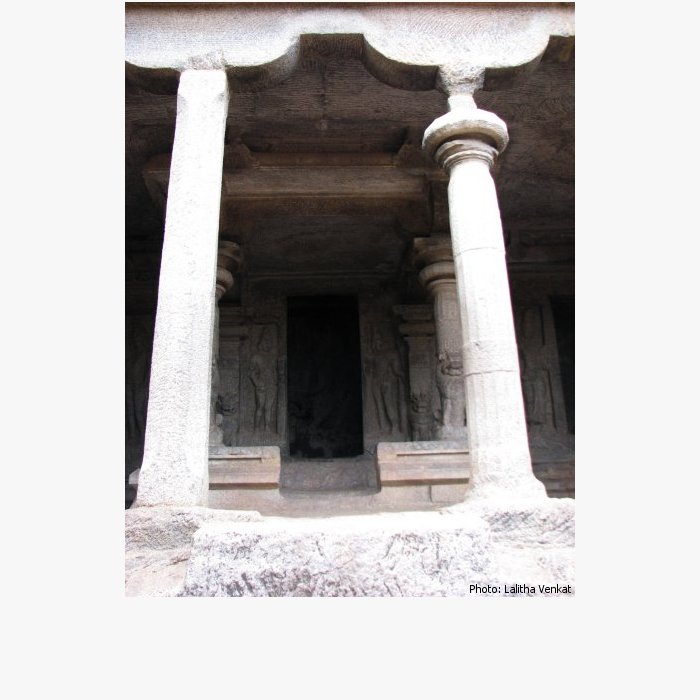
Of the three shrines on the inside,
the central one is more prominent with a portico and two pillars with a
seated lion base. In all three shrines there are dwarapalakas.
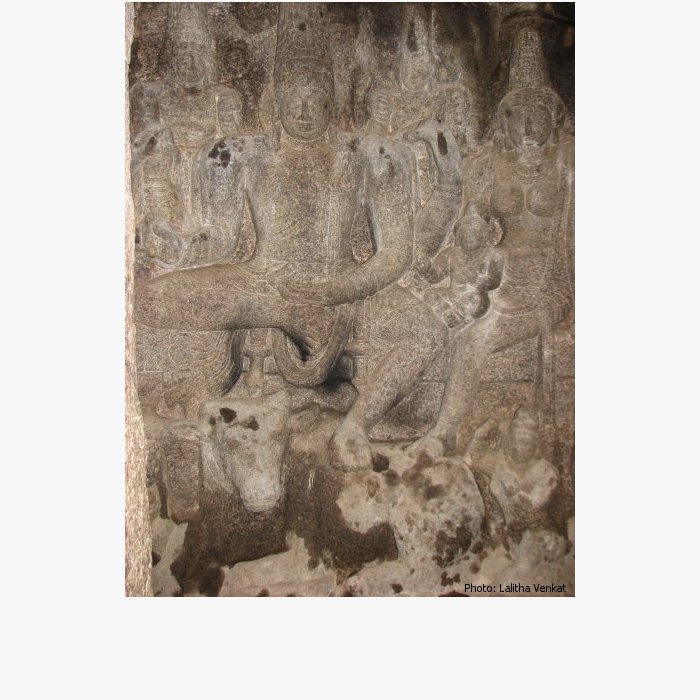
The relief work on the rear wall of the central shrine is a Somaskanda
panel - Siva seated with Uma and son Skanda with their feet resting on
a bull. Vishnu & Brahma and Surya are depicted behind Siva.
A devotee is kneeling down offering worship.
Mahishasuramardhini Mandapam, Mahabalipuram, Tamilnadu
Mahishasuramardhini Mandapam, Mahabalipuram, Tamilnadu
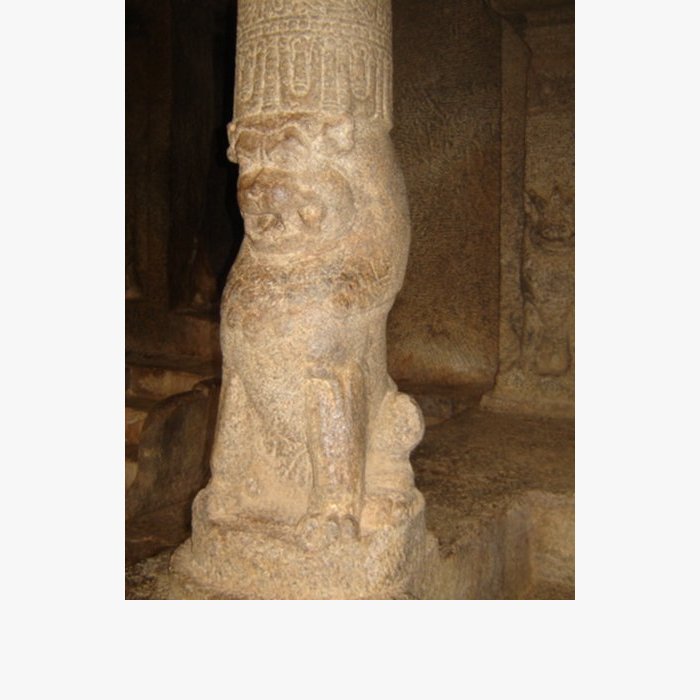
Mahishasuramardhini Mandapam, Mahabalipuram, Tamilnadu
Pillar with a seated lion base on the portico of the central shrine
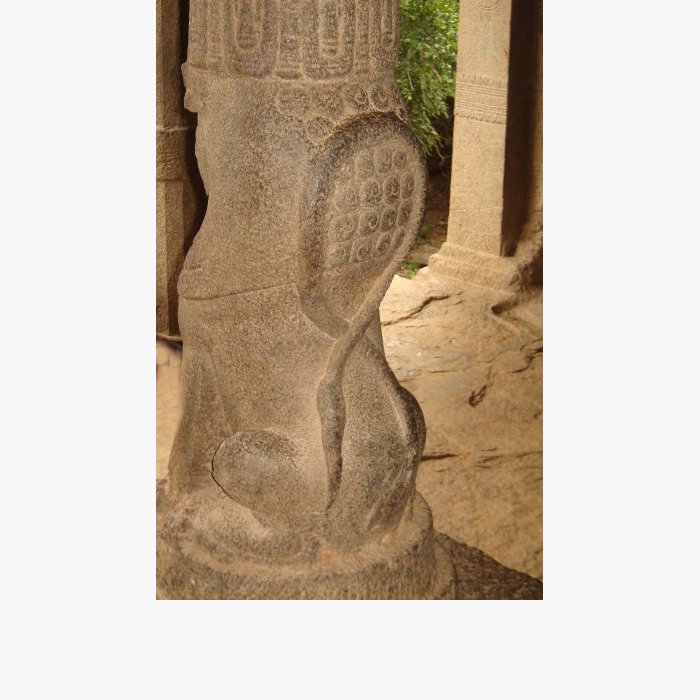
Mahishasuramardhini Mandapam, Mahabalipuram, Tamilnadu
Pillar with a seated lion base on the portico of the central shrine
Mahishasuramardhini panel
On the right side of the shrine,
is a relief wall panel - an ongoing fight between Durgai and the demon
Mahisha - seen with human body and buffalo head. As against the panel
seen in the Atiranachanda Mandapam at Saluvakuppam near the Tigers cave,
here there is an umbrella above Mahisha too. He is not yet defeated.
On the other hand, he is in a very active pose, all ready to strike the
Devi with his mace. Durga seated on a lion is also seen in action,
shooting an arrow at the demon. On the Devi's side there are several
fighting ganas. There is a woman at the foot of the lion swinging
a sword. Just above this woman, a man is falling headlong.
Beside the demon, there are a few soldiers but they seem to be retreating
in fear & there is one dead warrior between the demon's feet.
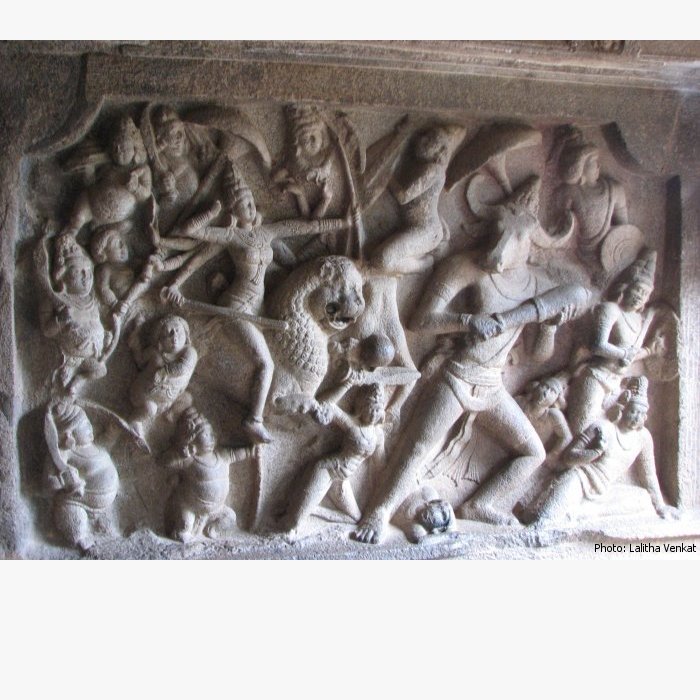
Mahishasuramardhini Mandapam, Mahabalipuram, Tamilnadu
Mahishasuramardhini panel
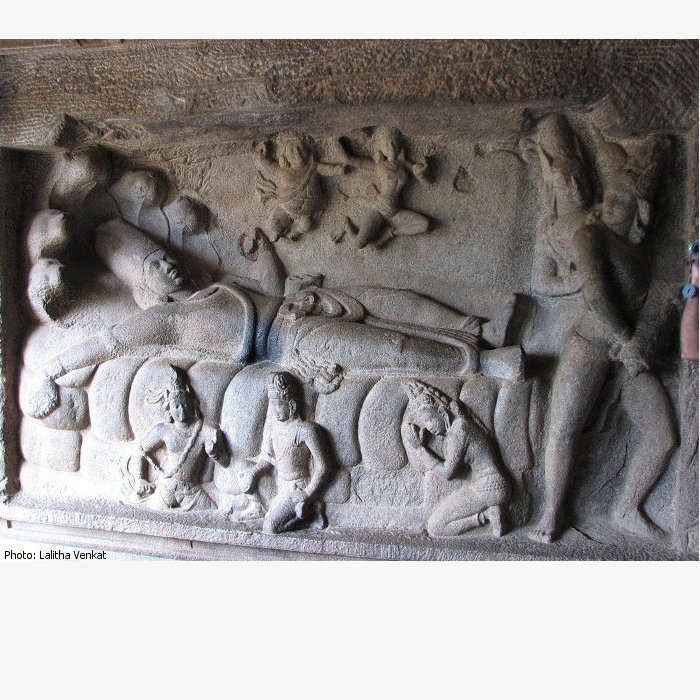
Mahishasuramardhini Mandapam, Mahabalipuram, Tamilnadu
Anantasayana panel
Anantasayana panel
The Anantasayana relief-panel
is seen on the left side of the ardha mandapam. There is a reclining
Vishnu as the central figure. He is resting on five headed Adisesha
with his head in a slightly raised position. His right arm is outstretched
and left arm rests bent at the elbow. His legs are slightly bent
at the knee. Above him are two flying figures and below him two figures.
At his feet is Lakshmi offering prayers. The four figures are considered
the weapons of Vishnu represented as ayudh-purusha-s (ayudha - weapon).
Dr.Swaminathan, retired professor from IIT Delhi had organized a trip
to Mahabalipuram to understand and appreciate better the great art
treasures gifted to us by the Pallavas.
We visited only a few mandapams and caves, but at every spot
Mr.Swaminathan shared with us details such as - the Pallava kings who
had contributed, the structural variations / refinement that can be
observed in the structures belonging to different periods. And sadly,
also the vandalism - mostly broken noses, attempt to project a Siva
temple as a Vishnu temple or vice versa and also an attempt by the kings
to take credit without contributing. Since several Pallava rulers seem
to have shared the same titles, that further adds to the confusion.
Mr.Swaminathan first gave a general introduction to the temple
architecture and sculpture - the different styles of rock architecture
seen at Mahabalipuram - the monoliths, cave mandapams, structural
temple, bas relief.
|